Texas Native Plants

Texas Native Plants
It’s no secret that we love Texas native plants at Buchanan’s. In fact, they’ve been our passion since 1986.
Texas Natives are much more than a beautiful addition to your landscape. They are an investment in our local ecosystem, especially when the habitat is heavily damaged. Native plants also help keep soil in a healthy balance by reducing erosion and aiding in drainage. Offering benefits like these, native plant ecosystem benefits are far greater than expected.
On top of their ecosystem benefits, Texas native plants are often brightly colored, with red, orange, yellow, and purple flowers. These plants are excellent choices for the garden because their foliage is among the top choices for ornamental beauty in our region.
Native of the Week
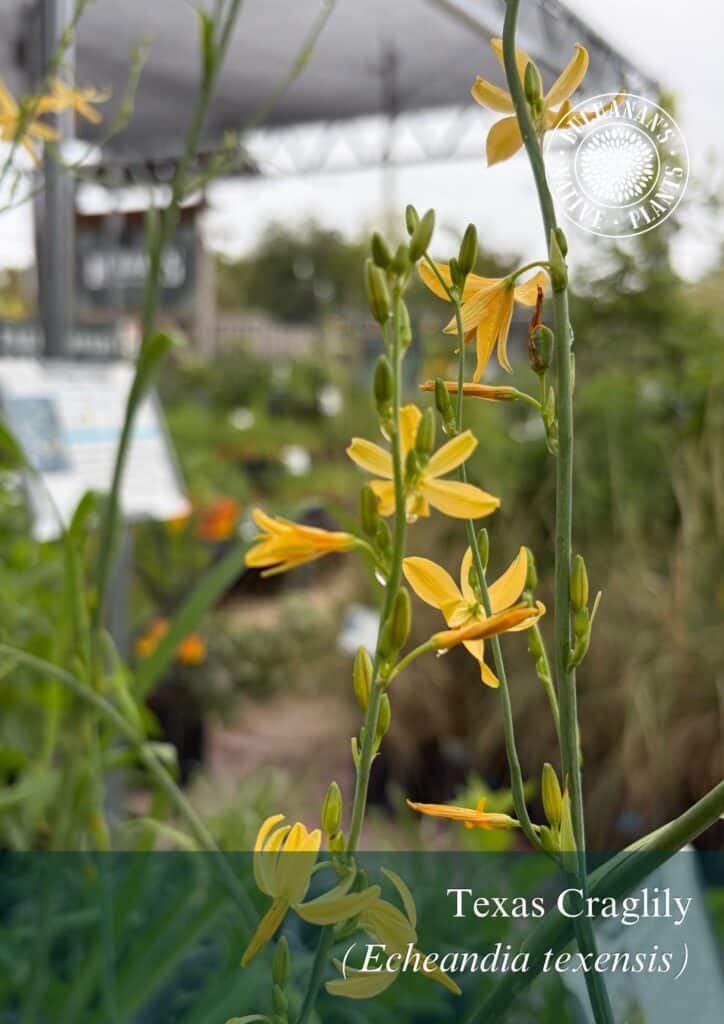
Common Name: Texas Craglily
Botanical Name: Echeandia texensis
A clumping form with rosettes of narrow, soft pale green, grass-like leaves. Roots form corms. Produces five-inch branched spikes of small star-like, mustard-yellow flowers. Texas Craglily provides nectar for butterflies, bees, and other beneficial insects from early spring through late fall. Now is a part of the Asparagaceae Family.
Drought tolerant. Great for rock gardens. Blooms April-November. Mature plants reach 12 to 36 inches tall and spread 6 to 12 inches wide. Texas Craglily goes dormant in winter and its leaves die back to the ground after a freeze. This is normal, and the clump regrows from its base the following spring. Do not cut back foliage until it has fully browned after the first hard freeze, usually late November or December.
Unique Finds
Exciting New Arrivals!
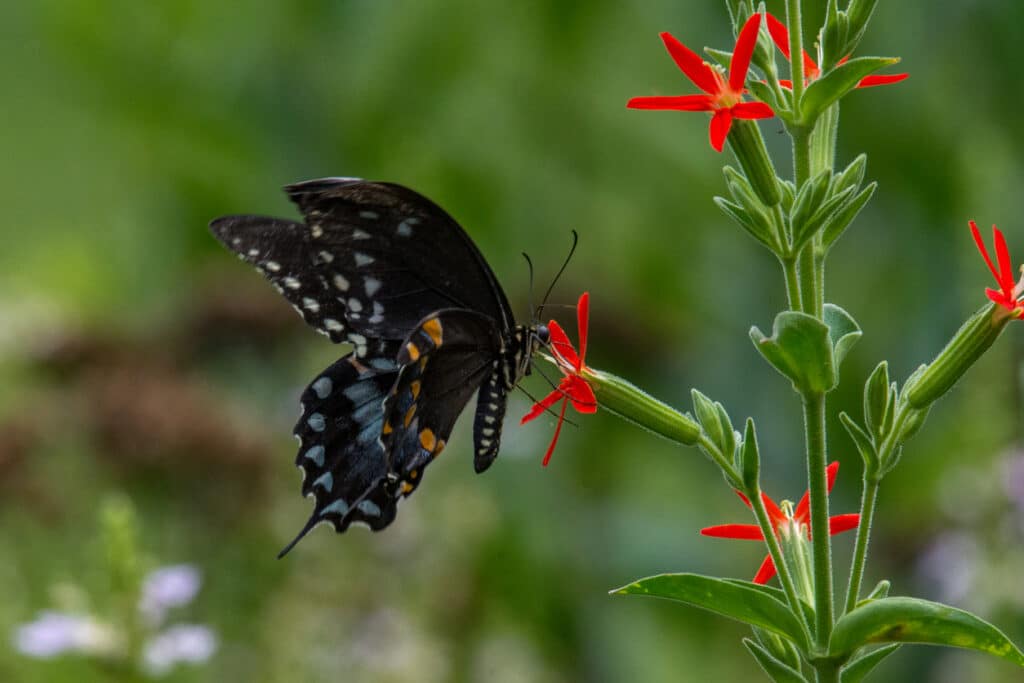
Hurry in this weekend to also shop a few unique native plants finds that we either haven’t seen in awhile and that are harder to come by! Arrivals such as Tall Catchfly which produces striking red flowers and is a member of the Dianthus family.
We have also received Spicebush which is the host plant for the Spicebush Swallowtail butterfly, the Palamedes Swallowtail and the Promethea Silkmoth. Another Texas native we are excited to see is the Nodding Yucca. This yucca produces beautiful bell-shaped white nodding flowers that. The flower spike can reach up to 8-10ft tall while the plant itself only reaches about 2ft tall.
When you plant a garden, it is not just for you – it is a habitat for all living things around you. So, with that in mind, here is our top 10 native plants for Houston that do just that. Many are heat and drought tolerant – cheerfully returning year after year in your garden.
Check out our ‘Tree & Shrub Planting Guide’ here.
Going Native
Incorporate Texas Natives into Your Landscape!
Native plants. The term has different meanings for different gardeners. There are Texas natives, US natives and those plants that act like natives. All in all, what most of us want in our garden are low maintenance plants that are attractive and functional. Plants that are not invasive and are a benefit to wildlife.
When you plant a garden, it is not just for you – it is a habitat for all living things around you. So, with that in mind, here is our top 10 native plants for Houston that do just that. Many are heat and drought tolerant – cheerfully returning year after year in your garden.
Check out our ‘Tree & Shrub Planting Guide’ here.


Grasses for Erosion Control
Native Solutions!
Looking help control eroding areas of your landscape from the Texas elements? We recommend planting native grasses such as Little Bluestem, Gulf Coast Muhly, Side Oats Grama, Switchgrass, Indiangrass. Their deep fibrous root systems help to stabilize the soil while also allowing rainwater to properly soak into the ground rather than running off which in turn mitigates flooding.
Native grasses are crucial to both our state and national ecosystem. They are vital for prairie restoration and conservation as well as supporting our local pollinators and wildlife.
Native Host Plants
Don’t Forget Our Garden Pals!
Feed the Butterflies & Moths!
Don’t forget to incorporate these native host plants for local butterflies and moths! Shop Gray Goldenrod, Buttonbush, Liatris, Butterfly Gaura and more. These plants attract various butterflies. For moths we recommend Datura for the
White-lined Sphinx Moth, Red Maple trees for the Cecropia Rosy Maple Moth and so many more!
What is a host plant? A host plant is defined as a plant species that supports the feeding and reproduction of certain organisms, with some species being more suitable than others, such as various perennials, trees, and herbs!
Read more about‘Moths and Texas Natives to Plant’.


Native Milkweed
Support Monarch Butterflies!
Go native with your Milkweed this season and snag varieties including Asclepias incarnata, Asclepias tuberosa, and Asclepias perennis! Help offset the loss of monarch breeding habits and promote migration by planting native Milkweed.
Available in 4″ Containers and 1gal. (Call for recent availability)
See more Texas natives here.
Watch our ‘Native Plants and Organic Gardening’ video here.


High-Nectar Natives
Show Texas Pollinators Some Love!
The nursery is loaded with amazing native options to choose from including native Milkweed, Autumn Sneezeweed, Lemon Beebalm, Giant Mississippi Penstemon, and Yellow Ironweed. These plants not only attract a variety of pollinators, but some also host specific butterflies and are of special value to native bees.
Learn about ‘Buzz Pollination’ here.
Wildflower Seeds
It’s Time to Scatter Your Wildflower Seeds!
It’s time to plant your wildflower seeds! Now through November is a great time to start many Texas native wildflowers from seed. Some of our favorites include Liatris, American Basketflower, Mexican Hat, Bluebonnets, Pitcher Sage, and more!
Watch our ‘Seed Starting’ video here.


Evening Blooms
For the Moonlight Pollinators!
Daytime isn’t the only time you and pollinators can enjoy your garden! We recommend incorporating plants that also cater to nighttime pollinators, such as bats and moths! Choose from plants including Datura wrightii, Red Yucca, Nodding Yucca, Fragrant Mistflower, Evening Primrose, Texas Olive, Texas Tuberose, and more!
Read more about moonlight gardens here.
Native Herbs
Texas Natives Can be Herbs Too!
Pollinators and wildlife are not the only ones who can enjoy Texas natives! Did you know that there are some Texas native plants that you can incorporate into your dishes and drinks? A few of our favorites include Lemon Bee Balm, Narrowleaf Mountain Mint, Mexican Oregano, and more!
See more perennials here.


Native Fruit
Incorporate Texas Natives into Your Food Forest!
Wanting to shake up your food forest? Consider incorporating some of these fruiting Texas native plants like Prickly Pear, Barbados Cherry, Flameleaf Sumac, and so much more!
Colorful Natives
Who Said a Native Garden Can’t Be Colorful?
Incorporate Texas natives into your garden and enjoy low maintenance blooms year after year.
Colorful native blooms you can enjoy now include Turk’s Cap, Gregg’s Mistflower, Fall Obedient, Esperanza, Fall Asters and more. Not only will you get to enjoy them but so will local wildlife and native pollinators.
See more Texas native plants here.
Learn ‘How to Create a Pollinator Garden’ here.


Native Trees for Houston
Our Native Tree Picks
 Bald Cypress
 Longleaf Pine
 Mexican Buckeye
 Bubba Desert Willow
 American Sycamore
 Roughleaf Dogwood
 Barbados Cherry Tree
 Texas Redbud
 Nuttal Oak
 Parsley Hawthorn
 Texas Kidneywood
 Burr Oak
 Southern Magnolia
 Mexican Plum
 Texas Olive Tree
 Carolina Buckthorn
 Eastern Redbud
Native Plants for Houston
Our Top Texas Native Picks
 Gregg’s Mistflower
 Red Columbine
 Blue Flax
 Black-Eyed Susan
 Gulf Coast Penstemon
 Red Yucca
 Inland Sea Oats
 Southern Wax Myrtle
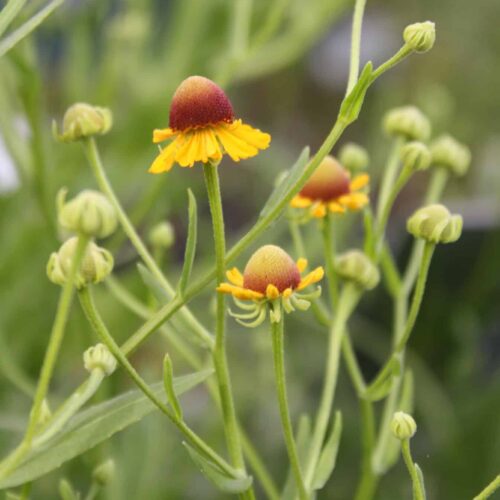 Autumn Sneezeweed
 Texas Lantana Texas Olive
 Salvia greggii
 Gulf Coast Muhly
 Turk’s Cap