Where would we be without pollinators? It’s important to recognize the vital role they play in our ecosystem. Pollinators are the birds, bees, insects, and animals that move pollen from flower to flower and that’s how plants produce fruit and seeds.
Facts About Pollinators
There are about 200,000 species of pollinators, and surprisingly about 1,000 of them are animals such as birds, bats, and small mammals. Most pollinators are beneficial insects such as bees, butterflies, flies, beetles, wasps, ants, and moths.
- About 75% of all flowering plant species need pollinators for fertilization.
- Pollinators are the linchpin of our ecosystem.
- Without them our food supply would end.
- Nearly 1/3 of all food and beverages is a result of pollination.
- Pollination accounts for nearly $20 billion in products in the USA alone.
Honey Bees – Important Food Pollinator
About one in every three bites of food we eat come as a result of honey bee pollination. Honey bees are not native to North America. They were introduced in the 1600’s from Europe for honey production. Today they are widely used to pollinate agricultural food crops. They are vital to our current production methods and are in danger. A mysterious phenomenon called Colony Collapse Disorder (CCD) is killing large numbers of honey bees.
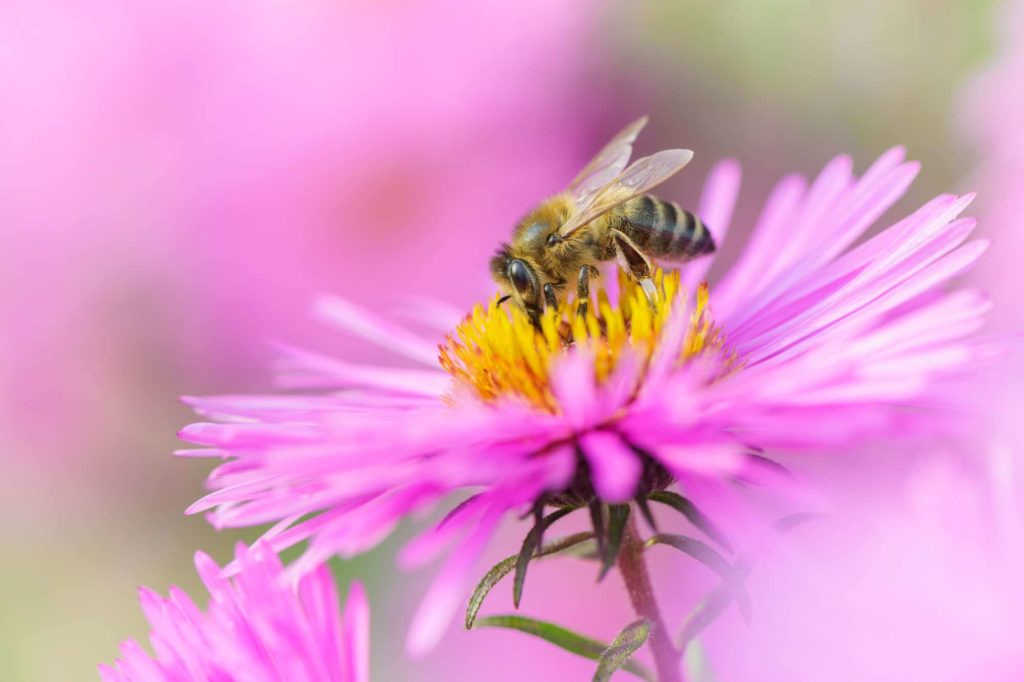
The current theories as to the cause of this disorder center around three areas; pesticides, pathogens, and environmental stresses. The exact cause is not yet known and could be the result of several factors. There is a lot of controversy surrounding the use and treatment of honey bees by the industry.
4 Easy Ways to Help Pollinators
1Create pollinator-friendly habitat with native flowering plants that supply pollinators with nectar, pollen, and homes. An environment that attracts hummingbirds, butterflies, and bees is a sign of a healthy garden. Buchanan’s has a wide selection of flowering natives and adapted plants to choose from and the knowledgeable staff to select the right ones for your project. You can also refer to our recent post about creating a butterfly habitat garden.
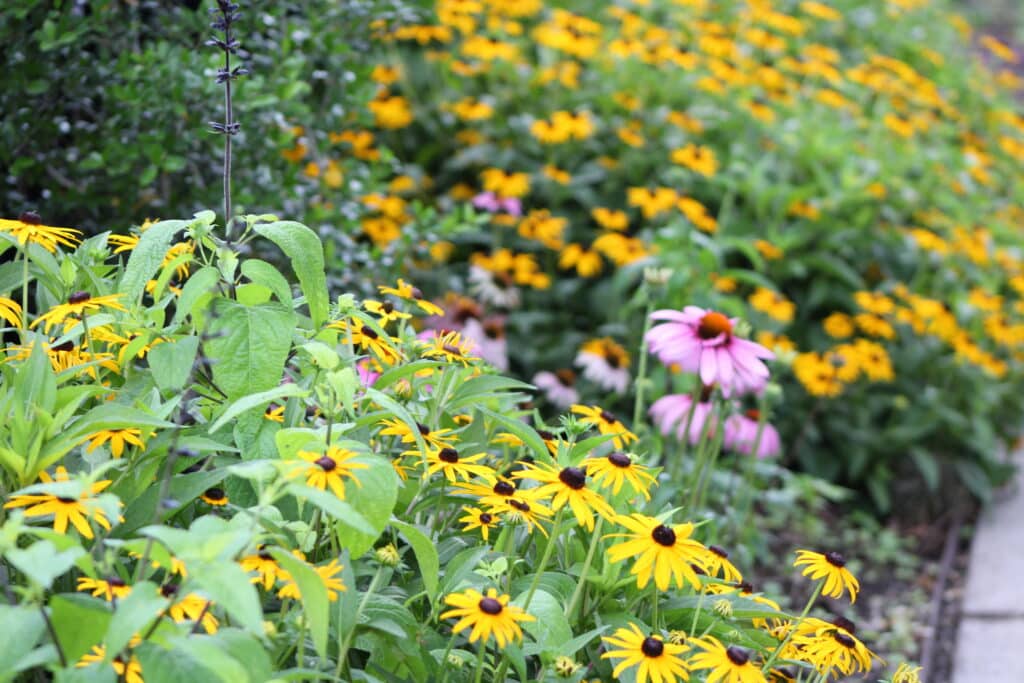
Design your garden so there are blooms throughout the seasons from spring through fall. Use native or well-adapted cultivars for our area. Choose old-fashioned varieties over ones hybridized for blooms at the expense of fragrance, nectar, and pollen. Go a step further and gradually replace lawn grass with flower beds.
2Build and hang a bee box. Most bees do not sting! If left alone, they go about their business of pollinating. There are commercial nest boxes available for mason bees but you can construct a simple one using something like small tubes of bamboo. These bees will utilize almost any kind of tube in which to lay their eggs. Bees play a very important role in pollination.
3 Avoid Pesticides!
Even natural ones such as Bacillus thuringiensis (Bt) can be harmful. If you must use them, choose the most selective and least toxic. Apply them in the evenings when most pollinators are not active. Remember, if you refrain from using pesticides, your garden will become a home for beneficial insects. Nature will achieve a natural balance in your garden. This approach is more practical, economical, and environmentally friendly.
4 Share this information with friends, family and co-workers. Educate your neighbors, schools, and community groups about the importance of pollinators. Volunteer to create and maintain habitats in your community. Learn more at http://www.pollinator.org/.
Our Favorite pollinator-friendly plants
Ever wonder what makes pollinator plants so important? What about which ones are the best for your Texas garden? Zach answers all the questions, and more!